 中文
中文 English
 Deutsch
 Italiano
 Türkçe
Tajikistan
Land of Snow Mountains, Silk Road Outpost
A Nation in a Cauldron
Signature Dish: Plov
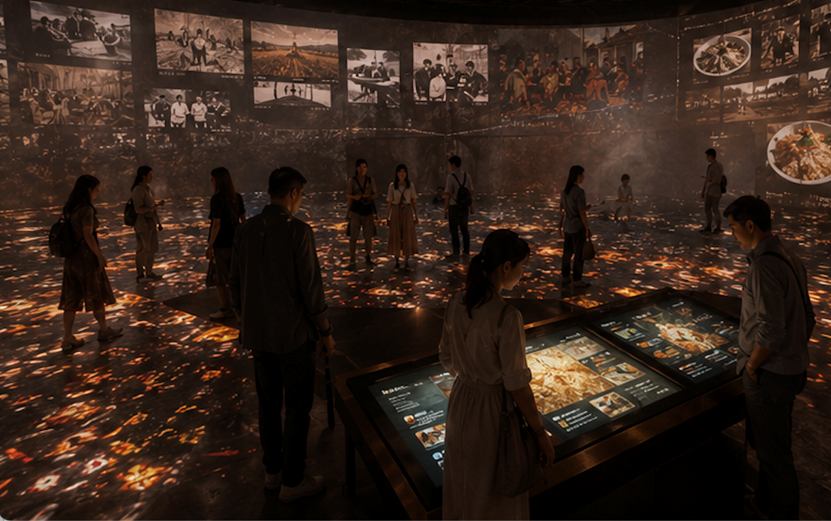
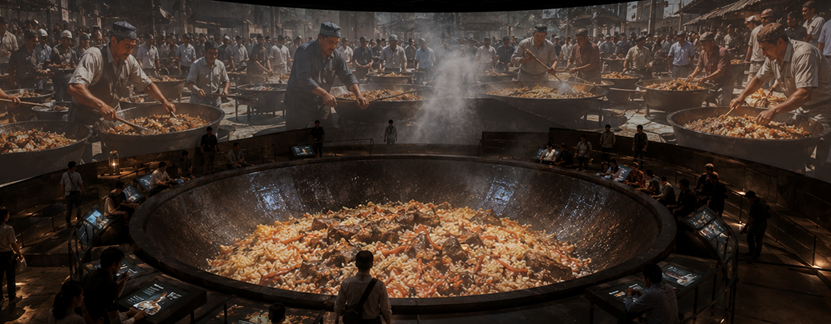
Dushanbe's "Plov" (Oshi Palov) is not merely food, but a materialized crucible of social relations. The exhibition center features a massive sunken "cauldron"-shaped space where visitors can sit around the edge and look down. Through immersive projection, the scene of men plunging their hands into a giant iron cauldron to continuously stir the plov is recreated—an action that seems ordinary but is in fact a silent expression of authority, generosity, and community hierarchy. A surround-sound system plays authentic samples of iron spatulas scraping, fire burning, and festival crowds.
Visitors can walk down a ramp to the center of the "cauldron bottom," experiencing the interweaving of power and belonging from the cooking perspective. Desktop interactive screens display archival photographs of collective farms promoting rice cultivation during the Soviet era, the evolution of plov from family kitchens to public celebrations, and the subtle differences in plov ingredients across regions and classes—the divide between lamb and horse meat symbolizing economic status and regional identity.
At the rear of the exhibition area, real plov house benches and low tables are restored. Visitors receive a standard Dushanbe plov (including quail eggs symbolizing honored guests) with their ticket, physically embodying the national narrative of "within one cauldron, no distinction between us" in the ritual of sharing rice and minced meat.
Broken Bread, Mended City
Signature Dish: Qurotob
The core of Qurotob lies in "breaking"—tearing hard oil naan by hand into pieces, pouring sour naan yogurt and vegetables over it, letting it soften and merge, ultimately becoming a collectively shared dish. This process perfectly metaphorizes Khujand, as Tajikistan's second largest city, experiencing economic rupture, ethnic mixing, and social reorganization after the dissolution of the Soviet Union.
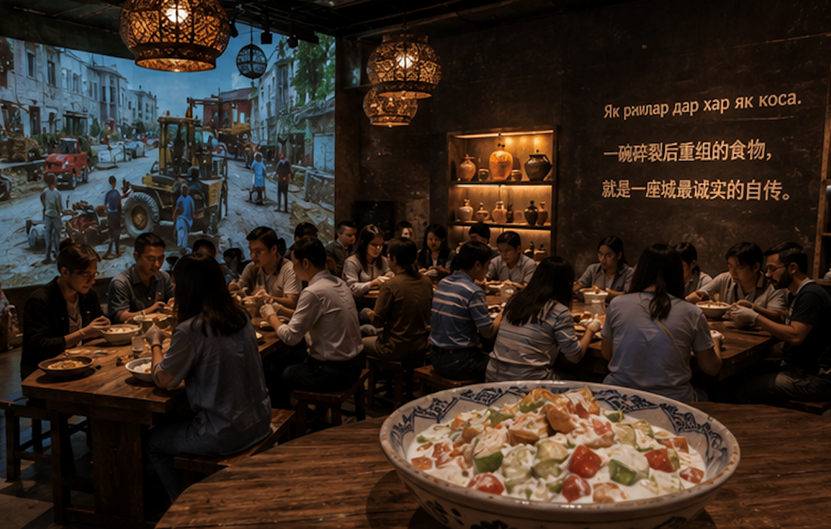
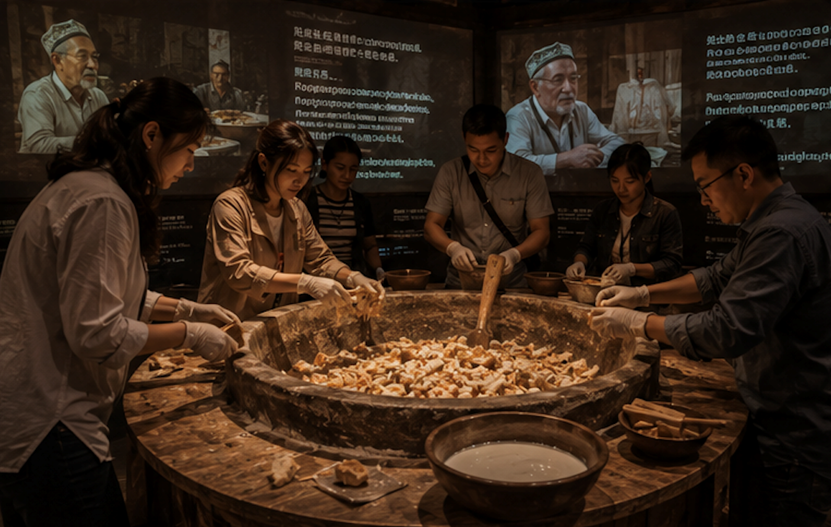
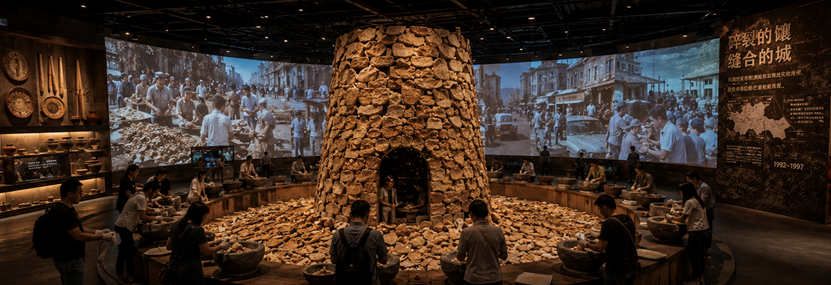
At the center of the exhibition space stands a "tower of ruins" stacked from thousands of dried naan pieces, symbolizing the shattered order of the post-Soviet era. Visitors are invited to wear gloves and personally break naan pieces into a giant shared stone mortar—each breakage is a deconstruction of the past. Multi-channel projections around the space play everyday scenes of Khujand bazaars, family meals, and street repairs; the sound system interweaves market conversations in Tajik, Uzbek, and Russian, emphasizing the city's multilingual coexistence. Display cases showcase naan stamps of different eras and purposes, old-fashioned yogurt clay pots, and wooden stirring sticks; wall screens show oral history fragments of how Khujand rebuilt community life through folk mutual aid networks rather than state planning after the Tajik Civil War (1992–1997).
At the end of the exhibition, visitors can sit at a long table and receive a bowl of freshly prepared Qurotob—yogurt poured over broken naan, garnished with tomatoes and cucumbers. A bowl of food broken and reassembled is the most honest autobiography of a city.
Begin Your Tajikistan Taste Journey
From the plov of the Pamir Highlands to the broken bread of the Fergana Valley, explore the soul that the Land of Snow Mountains bestows upon food.
Get Tickets →