 中文
中文 English
 Deutsch
 Italiano
 Türkçe
Gansu
The Hexi Corridor, Throat of the Silk Road
A Bite of Warmth in the Golden City
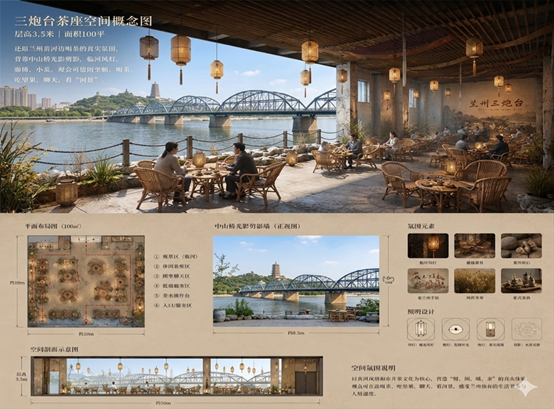
Signature Dishes: Beef Noodles, Hand-grabbed Lamb, Sanpao Tea
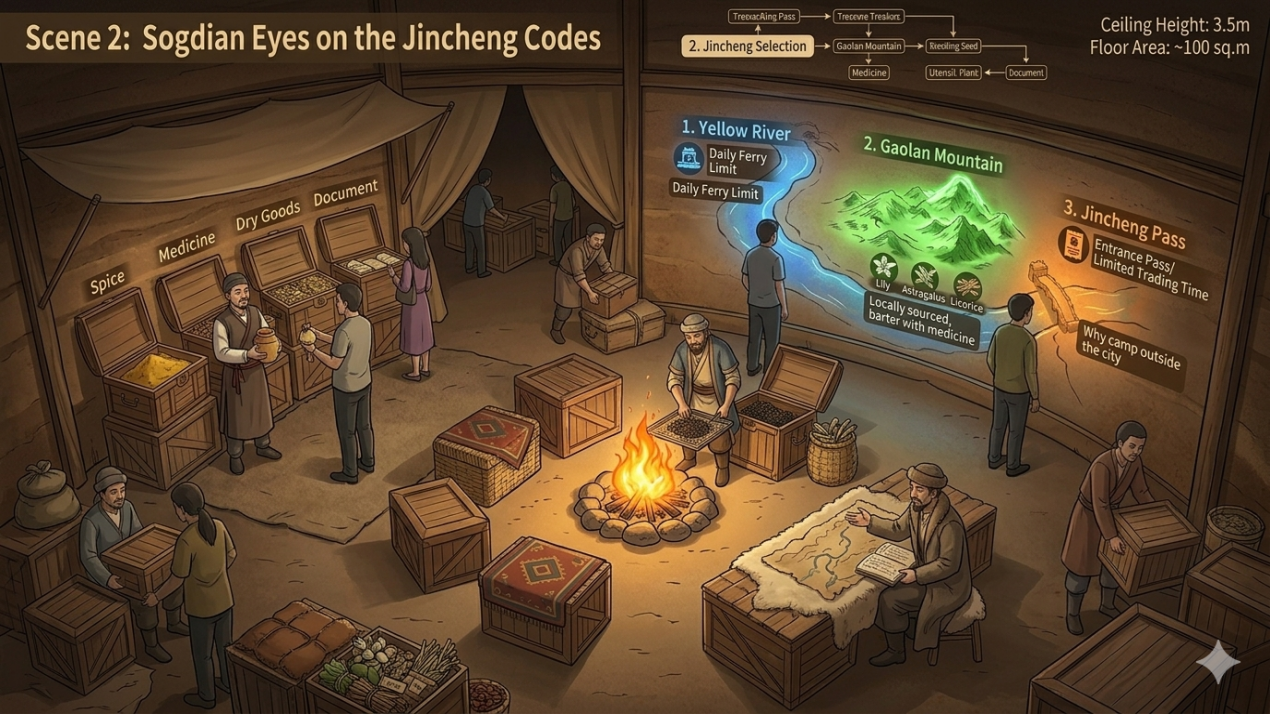
The Lanzhou Pavilion centers on "Medicine and Food: The Northwestern Way of Life" as its core narrative. Through rammed earth textures, Yellow River waterfronts, Silk Road camel shadows, and street market life, it creates an immersive Northwestern atmosphere. With morning noodles, noon meat, and evening tea as its three core scenes, it transforms Silk Road fusion, high-altitude survival wisdom, and daily food therapy into spatial language, symbolizing the sedimentation of civilization from Silk Road post stations to street life.
The pavilion explores four threads: Silk Road hub, Sogdian trade, medicine and food from the same source, and multi-ethnic coexistence. It showcases how arid high-altitude climate, Yellow River ferry geography, and Silk Road products shape Lanzhou's unique dietary system, covering the complete process from spices and medicinal herbs, meat nourishment, tea moistening, to daily market meals.
Combined with traditional craftsmanship, merchant camp scenes, and communal sharing culture, it emphasizes "the survival wisdom behind the street market life," helping viewers understand that Lanzhou cuisine is not only a flavor, but also a cultural language closely connected to heaven and earth, the Silk Road, and life.
A Cave of Murals, A Thousand Tastes
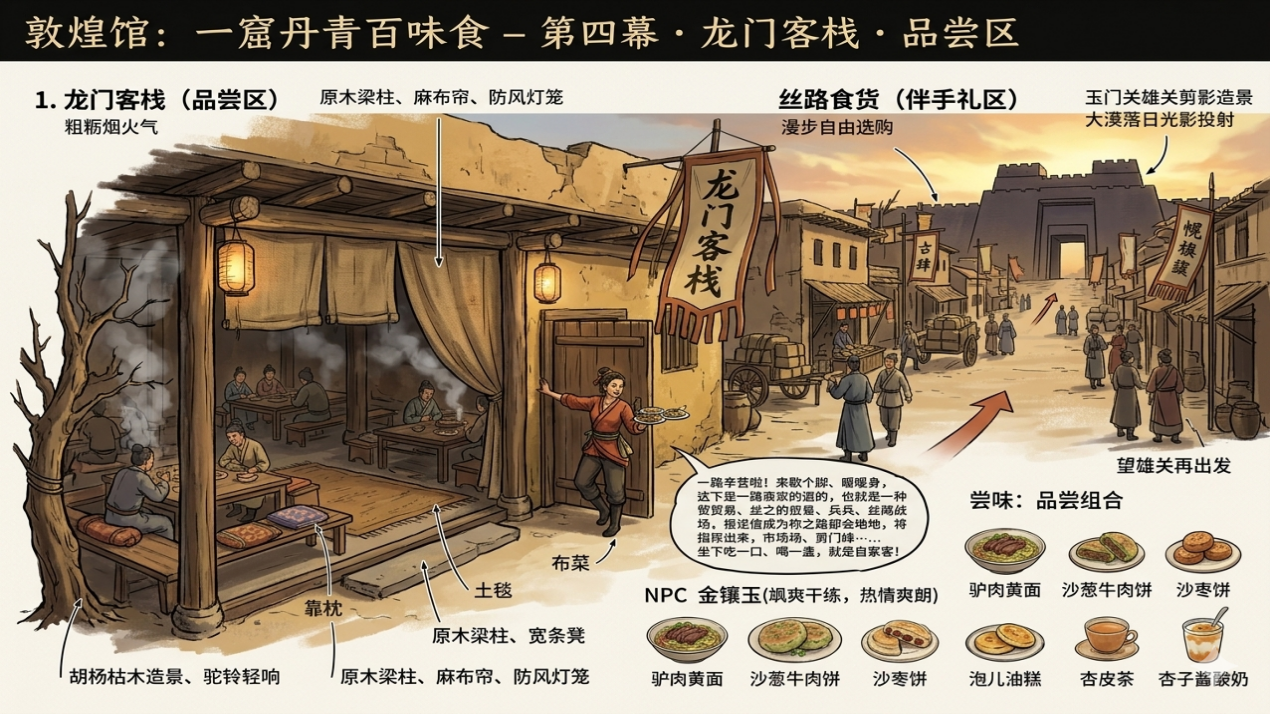
Signature Dishes: Donkey Meat Yellow Noodles, Paoer Oil Cake, Apricot Skin Tea
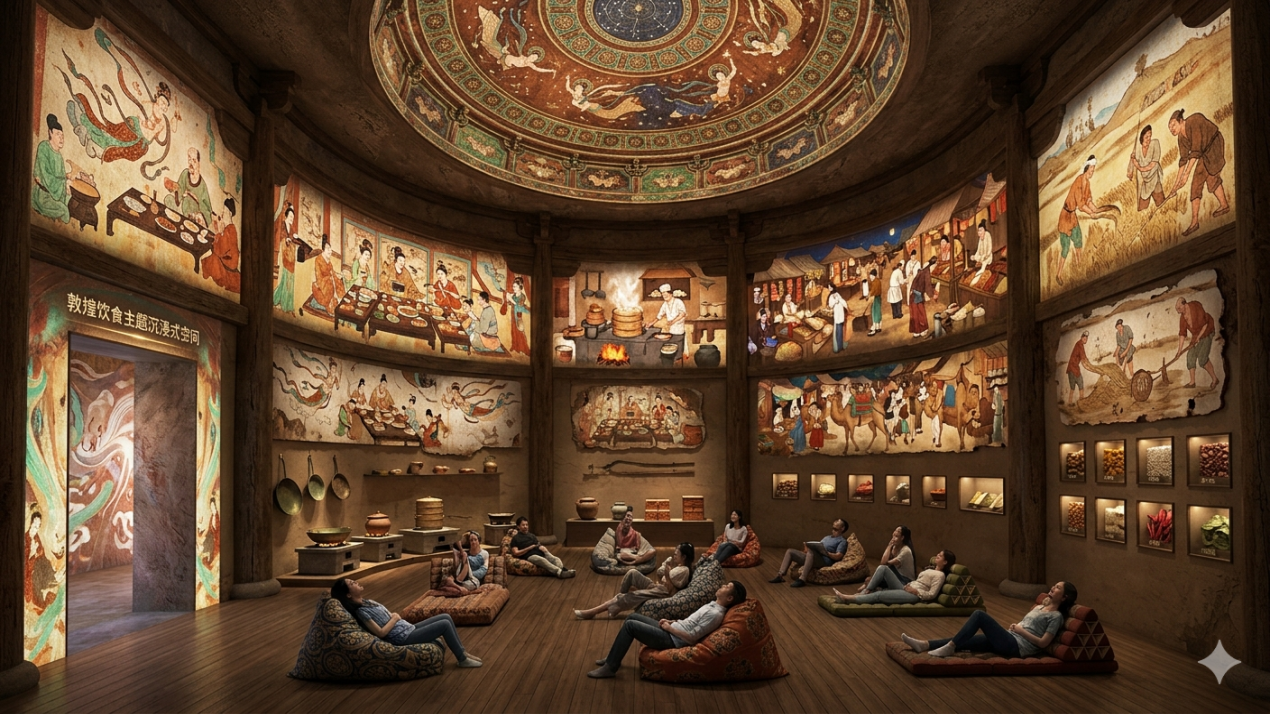
The Dunhuang Pavilion centers on "The Murals Speak, Food Hides a Thousand Years" as its core narrative. Through ochre red, earth yellow, stone blue, and gilded gold mural tones, together with grotto cliff walls, Gobi oasis, and Tang Dynasty street scenes, it creates an immersive Silk Road mural atmosphere. Its central "Mural Eatery" live performance transforms "the diet in murals" into living spatial language, symbolizing the fusion of civilization from grotto murals to human life.
The pavilion explores four threads: Central Plains techniques, Western Region ingredients, Tang Dynasty aesthetics, and Gobi wisdom. It showcases how the Gobi oasis environment, Silk Road two-way exchange, and frontier farming history shape Dunhuang's unique dietary system, covering the complete process from noodle inheritance, pastry techniques, Gobi beverages, to market banquets.
Combined with grotto murals, Tang Dynasty cooking utensils, Silk Road ingredients, and post station inn culture, it emphasizes "the Silk Road symbiosis behind the taste," helping viewers understand that Dunhuang cuisine is not only a flavor, but also a cultural language closely connected to the Gobi, murals, and the Silk Road.
Begin Your Gansu Taste Journey
From beef noodles on the Yellow River banks to apricot skin tea before the Mogao Caves, explore the soul that the Silk Road pass bestows upon food.
Get Tickets